

Why is our climate protection project so effective?
First things first: we simply want to do the right thing. The guiding principle of our project is that greenhouse gases should never be produced in the first place. Once they enter the atmosphere, capturing emissions is expensive and time-consuming.
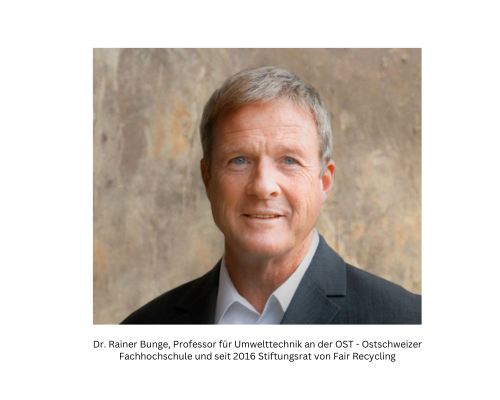
Dr Rainer Bunge, a professor of environmental engineering at the University of Applied Sciences of Eastern Switzerland (OST), has been a member of Fair Recycling’s Foundation Board since 2016.
Our climate protection project
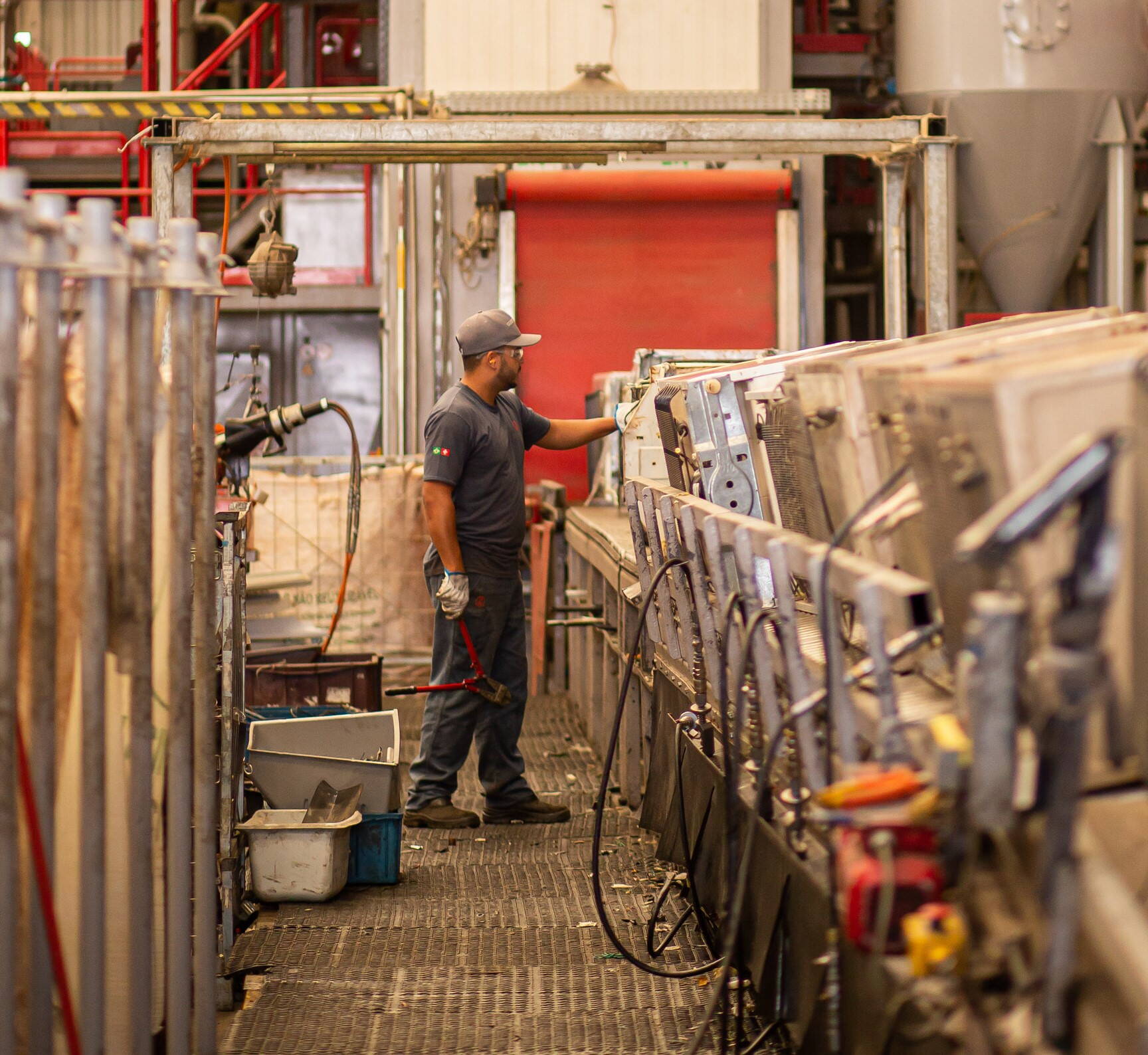
Ten years ago, we developed a technical project to extract climate-damaging CFCs and HFCs from old refrigerators’ cooling circuits rather than releasing them into the air. These gases are then incinerated in a high-temperature furnace, in accordance with the stringent regulations set out in the SWISS CHARTER standard.
The difference between negative emissions and emissions reduction:
Negative emissions: the removal of greenhouse gases from the atmosphere.
Emissions reduction: measures to reduce greenhouse gas emissions.
More climate protection for the same money
‘As long as global CO2 emissions significantly exceed the amount removed from the atmosphere, the global carbon balance is unaffected by whether reductions are achieved through emission avoidance or by removing CO2 (“negative emissions”). However, negative emissions are significantly more expensive per ton of CO2 than emission avoidance measures. Therefore, at the same cost, significantly more CO2 can be saved through emission avoidance than through negative emissions.’
Prof. Rainer Bunge
Here are the differences in carbon footprints with and without measures involving negative emission technologies or emissions reduction:
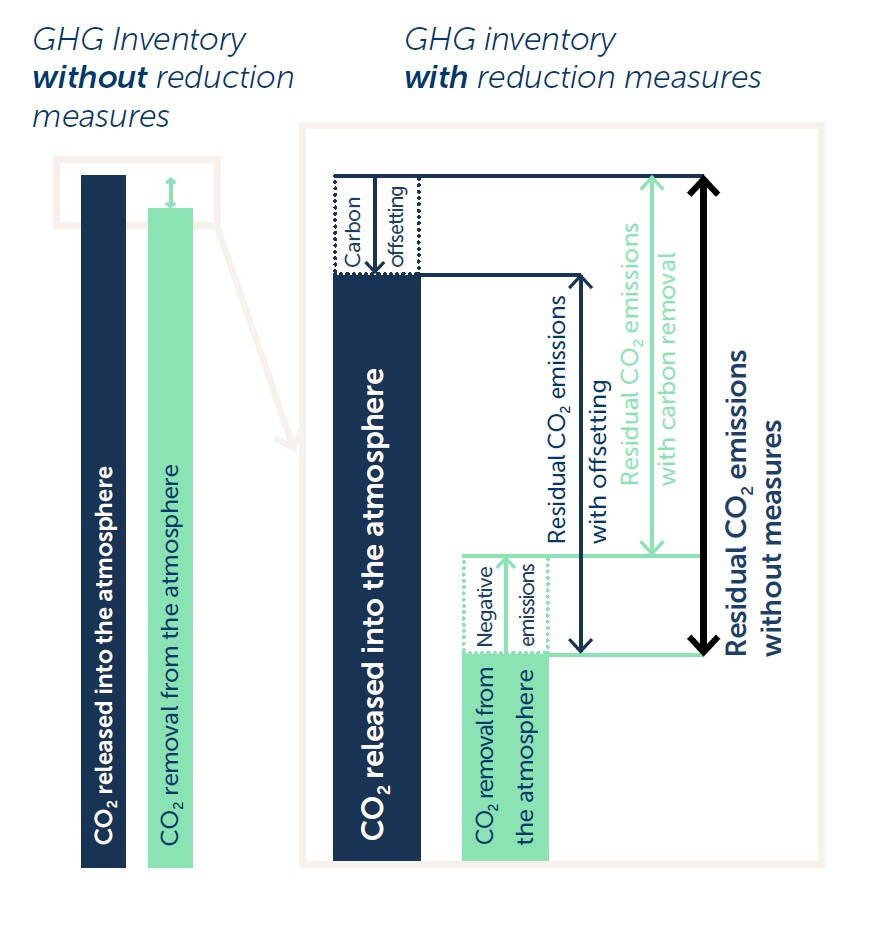
Image: ©Greenhouse Gas (GHG) Inventory – Prof. Rainer Bunge, Fair Recycling Foundation
Fair Recycling Foundation
Obstgartenstrasse 28
CH-8006 Zurich
Obstgartenstrasse 28
CH-8006 Zurich